
Palpitations, chest tightness, poor sleep: is it autonomic imbalance?

Your autonomic nervous system runs the things that happen without you thinking about them: heartbeat, breathing, digestion, body temperature. It has an "accelerator," the sympathetic nervous system, and a "brake," the parasympathetic nervous system. Long-term stress, too little sleep and a chaotic schedule keep your foot on the accelerator while the brake gets weaker. The result can be palpitations, chest tightness, gut trouble, cold hands and feet, poor sleep and other discomforts in several places, often with no clear abnormality on tests. The safer order is to rule out heart, thyroid and other conditions first, then assess the autonomic nervous system and stress axis.
Does this sound familiar?
- Your heart suddenly races and your chest feels tight when you're not doing anything
- When you're nervous your stomach hurts or you need the bathroom, or you feel bloated after eating a little
- Your hands and feet are cold, you break into cold sweats easily, or you swing between hot and cold
- Your body is exhausted but your mind won't stop, and you can't sleep when you lie down
- On holidays you get headaches, fall ill, or completely crash
- You've seen several specialists and every report says normal
What is autonomic imbalance?
Your autonomic nervous system works like a car's accelerator and brake. The sympathetic system is the accelerator: when you need to rise to a challenge, it speeds up your heart, raises blood pressure and releases blood sugar. The parasympathetic system is the brake: it handles rest, digestion and repair. In a healthy state, the two switch smoothly depending on the situation: accelerate in the meeting, ease off after work, and move into repair mode at night.
Stress itself is a normal body response. The problem is when the stress never ends: work messages until midnight, broken sleep, still thinking about things on holiday. With the accelerator pressed for so long, the brake slowly stops working. Neuroendocrinologist McEwen used the term "allostatic load" to describe this long-term wear and tear, which can affect the heart and blood vessels, metabolism, immunity and sleep.
Common causes: a functional medicine view
| Area | What may be happening |
|---|---|
| Stress axis | The stress axis formed by the brain, pituitary gland and adrenal glands (the HPA axis) stays switched on for a long time, and the cortisol rhythm gets disrupted |
| Sleep | Too little deep sleep means the parasympathetic system never gets a full chance to work, so the sympathetic system overreacts more easily the next day |
| Blood sugar | When blood sugar drops quickly, the body releases adrenaline to bring it back up, causing a racing heart, shaky hands and sweating |
| Thyroid | An overactive thyroid causes palpitations, heat intolerance, shaky hands and weight loss, symptoms very similar to autonomic imbalance |
| Nutrients | Magnesium and B vitamins are involved in nerve signaling and energy metabolism. Long-term stress and an unbalanced diet may increase your needs |
| Gut | The gut and brain are connected by nerves in both directions. Stress affects the gut, and gut discomfort in turn affects mood |
| Hormones | Hormone swings around menopause often bring hot flashes, palpitations, insomnia and mood ups and downs |
| Stimulants | Caffeine, energy drinks, nicotine and alcohol all disturb autonomic balance |
How it shows up
- Heart and circulation: palpitations, chest tightness, blood pressure that swings up and down, dizziness when standing up
- Gut: bloating, acid reflux, alternating diarrhea and constipation
- Temperature and skin: cold hands and feet, unusual sweating, hot flashes
- Sleep: trouble falling asleep, light sleep, waking in the night
- Muscles: stiff neck and shoulders, tension headaches, teeth clenching
- Mood and focus: irritability, being easily startled, trouble concentrating
Who is more likely to have it?
- Managers and professionals in high-pressure roles who are on call for long hours
- Perfectionists and people who tend to carry everything themselves
- Shift workers, people who travel across time zones, and anyone whose schedule changes often
- Women around menopause
- People who have just been through a major life event, such as changing jobs, moving house, losing a loved one, or caring for family
- People who drink a lot of caffeine and don't get much exercise
Quick self-check
If three or more of these have applied to you over the past month, you may want to consider an autonomic and stress assessment:
- Several days a week, your heart races for no reason or your chest feels tight
- Your gut acts up whenever you're nervous
- It's hard to relax after work, and your mind keeps going over work
- It takes you over 30 minutes to fall asleep, or you wake in the night and can't get back to sleep
- Your neck and shoulders are stiff most of the time, and you often get headaches
- You've already seen the relevant specialists and the tests showed no clear abnormality
See a doctor first if
The following symptoms may signal a heart, brain or other emergency. Please seek medical care right away or call 119. Don't assume it's an autonomic problem first:
- Chest pain or pressure spreading to your left arm, jaw or back, or with cold sweats or breathlessness
- Fainting, a change in consciousness, or a very fast, irregular heartbeat
- Weakness in one arm or leg, a drooping face, or slurred speech
- A sudden, severe headache
- Rapid weight loss, heat intolerance and clearly shaky hands (possibly an overactive thyroid)
- Thoughts of harming yourself (in Taiwan you can call the 1925 mental health support line)
5 things you can start with
- Practice slow breathing: breathe in for 4 seconds and out for 6 seconds, 5 minutes at a time, 2–3 times a day. A longer out-breath helps switch on the parasympathetic system.
- Set a daily "clock-off time": no work messages in the hour before bed, so your brain gets a clear signal that the day is over.
- Do regular aerobic exercise: 150 minutes a week of moderate activity, such as brisk walking, swimming or cycling.
- Cut back on caffeine and alcohol, especially coffee after the afternoon and drinks you use to unwind before bed.
- Keep a fixed wake-up time, so your body's rhythm has an anchor to rely on.
How ĒSEN assesses the autonomic nervous system and stress
On your first visit to ĒSEN, you can start with our first-visit appointment, which includes a 56-item core health check, an autonomic nervous system test, and a full 30-minute consultation with a physician. The autonomic test uses heart rate variability (HRV) to look at how your sympathetic and parasympathetic systems are regulating, and your doctor reads it together with your symptoms and lifestyle.
What your doctor will ask
- When, in what situations and how often your symptoms appear, and whether you've been checked by other specialists
- Your work rhythm, sources of stress, and any recent major life events
- Your sleep, caffeine, alcohol and exercise habits
- Your mood, and whether a psychiatrist or psychologist should be involved too
Tests that may be arranged
Depending on your situation, your doctor may arrange functional medicine testing. This can include morning cortisol and DHEA-S (hormones related to the stress axis), thyroid function, blood sugar, magnesium and B vitamin markers, homocysteine and more. The actual tests are chosen by your doctor based on your situation. The ĒSEN 360 Genetic Test can add information on genetic tendencies related to stress response and mood.
After the assessment
Your doctor will talk through the Stress & Autonomic Program based on your results. The program runs in 90-day blocks, with physician follow-ups and check-ins from your health advisor, alongside a lifestyle plan covering four areas: mood, sleep, exercise and nutrition. To see how each stage is arranged, check the 90-day flow on the Stress & Autonomic Program page. A psychologist can help you work on sources of stress and thinking patterns. Whether in-clinic treatments such as Intravenous Laser Irradiation of Blood (ILIB) or IV Nutrient Therapy are needed, and how they're arranged, is planned by your doctor based on your individual assessment.
Related articles
- Common symptoms of autonomic imbalance
- Stressed and sleeping badly: what's happening in your body
- Insomnia
- Gut health
This article is for general health information and cannot replace an individual assessment by a physician. Whether a treatment is right for you will be assessed by a doctor at your consultation.
FAQ
Is autonomic imbalance a disease?
What does an autonomic nervous system test measure?
Are palpitations always an autonomic problem?
How is autonomic imbalance related to anxiety disorder?
How long until I feel more stable?
Related pages
 Signature Programs
High stress, autonomic imbalance: how can a 90-day program help you sort it out?
Turn stress into numbers you can see, then practice and track your recovery over 90 days.
Read →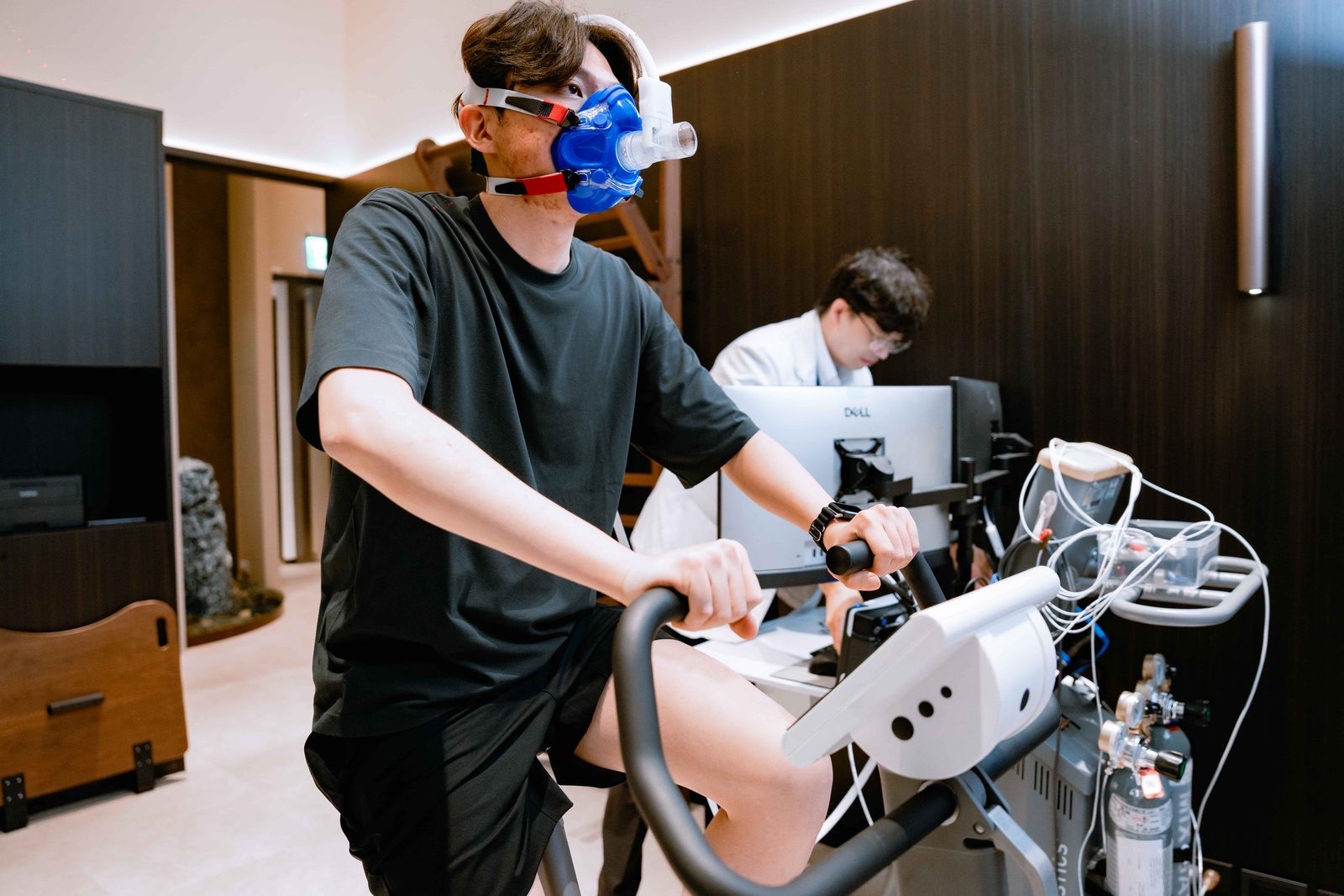 Specialty Treatments
What is functional medicine testing? How is it different from a regular checkup?
Read your body's signals clearly before flagged results show up: what testing looks at and how to interpret it.
Read → Specialty Treatments
High stress, poor sleep: why see a psychologist?
Mood and sleep are a pillar of health: how a psychologist works alongside physicians and dietitians.
Read → Specialty Treatments
What is Intravenous Laser Irradiation of Blood (ILIB)?
A beam of low-energy red light shining on your blood: how it works, where research stands, and how it's done at ĒSEN.
Read → Conditions We Treat
Can't fall asleep, waking at night, never feeling rested: what causes insomnia?
Can't sleep or keep waking up? Look for the causes in stress, body clock and daily habits.
Read → Health Articles
What Are the Symptoms of Autonomic Dysfunction?
Palpitations, chest tightness, gut trouble, light sleep: your body may have had its foot on the gas for too long.
Read → Health Articles
Why Am I Always Tired?
Still tired after sleeping? Look for the cause in three places: making energy, recharging and draining.
Read → Health Articles
Can't Sleep Because of Stress? Here's What to Do
Can't sleep under stress? Your brain's security guard hasn't clocked out yet. From how it works to what you can adjust.
Read → Biomarker Library
How to read cortisol, and why test timing matters so much
Cortisol follows a strong daily rhythm, so results must always be read alongside the time of the blood draw.
Read → Biomarker Library
What is DHEA-S? Is a low result aging or stress?
DHEA-S comes from the adrenal glands and declines with age, so it must be read against age-based ranges.
Read → Lifestyle Conditions Library
What Is Acid Reflux? Why Do I Keep Getting Heartburn?
Heartburn, sour fluid coming up, or a lump in your throat may be acid reflux.
Read → Lifestyle Conditions Library
Always Anxious or Feeling Low: What's Going On?
Always on edge, or can't find your energy? Body and mood go together, and they can be assessed together.
Read → Lifestyle Conditions Library
What Is Brain Fog? Why Is It Getting Harder to Focus?
Feel like your mind is in a fog, or a word is on the tip of your tongue? It's often several causes stacked together.
Read → Lifestyle Conditions Library
What is chronic urticaria, and why do my hives keep coming back?
Hives coming and going for more than 6 weeks? Most people never find a single allergen, but the triggers can be mapped.
Read → Lifestyle Conditions Library
Why are my hands and feet always cold?
Cold hands and feet in winter and summer alike? It's often linked to your autonomic nervous system, iron, thyroid and muscle mass.
Read → Lifestyle Conditions Library
Losing a Lot of Hair Lately? Here's What Might Be Behind It
Losing a handful of hair every time you wash it? Figure out which type of hair loss it is first, so you head in the right direction.
Read → Lifestyle Conditions Library
Why do I keep getting headaches? How do you tell a migraine from a regular headache?
Recurring headaches? First tell whether it's a migraine or a tension-type headache, then look for the triggers.
Read → Lifestyle Conditions Library
What is premenstrual syndrome, and why do I get so irritable before my period?
A few days every month when your mood spins out and you feel bloated and snacky? It may be PMS.
Read → Genetic Testing
360 Genetic Test and 360 Pro: what's tested, how they differ, and how to use your report
One blood draw to see your inborn tendencies: 360 looks at risks, Pro looks at personalized modules.
Read → Nutrient Library
Vitamin B complex: a metabolic working group of 8 vitamins
Coenzymes for energy metabolism and methylation: the 8 B vitamins and their active forms
Read → Nutrient Library
L-Theanine: An Amino Acid Unique to Tea
An amino acid unique to tea, studied for its link to brain waves and a sense of relaxation
Read → Nutrient Library
Magnesium: the mineral more than 300 enzymes rely on
A cofactor for more than 300 enzymes: how the forms differ and what it interacts with
Read → Member Stories
Poor Sleep, Constant Fatigue: What Is Your Body Telling You?
She wanted to understand why poor sleep and constant tiredness always seemed to show up together.
Read → Member Stories
Feeling Fine: Does It Really Mean You're Fine?
He takes great care of his work, but his own body comes last.
Read → Specialty Treatments
What is IV Nutrient Therapy? Do IV drips really work?
A way of supplementing that bypasses the gut: what the ingredients do, where the evidence stands, and who should be assessed first.
Read →
- Task Force of the European Society of Cardiology and the North American Society of Pacing and Electrophysiology. Heart rate variability: standards of measurement, physiological interpretation and clinical use. Circulation. 1996;93(5):1043-1065.
- McEwen BS. Protective and damaging effects of stress mediators. New England Journal of Medicine. 1998;338(3):171-179.
- Thayer JF, Åhs F, Fredrikson M, Sollers JJ, Wager TD. A meta-analysis of heart rate variability and neuroimaging studies: implications for heart rate variability as a marker of stress and health. Neuroscience and Biobehavioral Reviews. 2012;36(2):747-756.
This is health education information. It does not replace a physician's diagnosis; whether a treatment is right for you needs a physician's assessment.